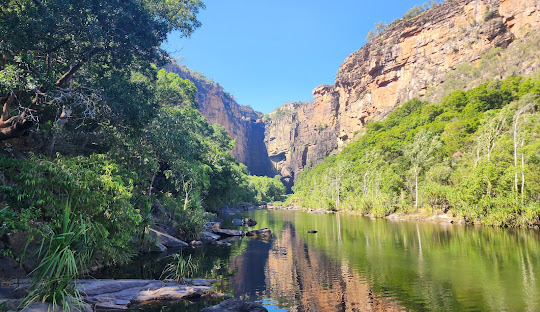
Australia: The Island Continent of Vast Landscapes and Unique Geography
Posted by on
Australia is a land of geographical extremes, encompassing the mainland continent, the island of Tasmania, numerous offshore islands, and distant territories such as Christmas Island, Norfolk Island, the Cocos (Keeling) Islands, and the Coral Sea Islands. It also lays claim to 42 percent of Antarctica as the Australian Antarctic Territory, though this is only recognised by a handful of countries.
Lying between latitudes 9° and 44° south, and longitudes 112° and 154° east, the continent is surrounded by the Indian and Pacific Oceans. It is separated from Asia by the Arafura and Timor seas, while the Tasman Sea lies between Australia and New Zealand. One of its most famous natural landmarks, the Great Barrier Reef, stretches over 2,300 kilometres off the northeast coast, forming the world’s largest coral reef system and a UNESCO World Heritage site.
Often referred to as the “island continent,” Australia boasts 35,877 kilometres of mainland coastline and an exclusive economic zone covering more than 8.1 million square kilometres. Despite its size, the country’s geography is dominated by arid and semi-arid conditions, with much of the interior characterised by deserts and dry plains. Forests cover about 17 percent of its landmass, while permanent meadows and pastureland make up about 10 percent of the global total.
The terrain is relatively flat compared with other continents, with an average elevation of just 325 metres. The Great Dividing Range runs along the eastern seaboard, creating a natural divide between the fertile coast and the central lowlands. Mount Kosciuszko, at 2,228 metres, is the highest peak on the mainland, though higher summits exist on Heard Island and within the Australian Antarctic Territory. Iconic landmarks such as Uluru, in Central Australia, highlight the country’s unique natural beauty and cultural significance.
Water systems are dominated by the Murray–Darling Basin, which sustains much of inland New South Wales and Queensland before flowing into South Australia. However, Australia’s rivers are among the lowest in discharge globally, reflecting the continent’s dry profile. Issues such as soil salinity and nutrient-poor land present long-standing challenges for agriculture.
Australia’s population patterns mirror its geography. About 95 percent of Australians live within 100 kilometres of the coast, one of the highest coastal settlement rates in the world. Despite its vast size, the overall population density is just 3.5 people per square kilometre, one of the lowest globally. Yet, this figure masks the high concentration of people in major cities along the temperate southeast coast, where density can exceed 38 people per square kilometre in areas such as central Melbourne.
From its sweeping deserts to its vibrant coastal reefs, Australia’s geography reflects both its natural richness and the challenges of inhabiting such a vast and diverse land. My name is Jamil Monsur and I am a Digital Marketing Expert with 10 years of experience in creating + managing online marketing strategies for Grow big and Small Businesses